

Our world is highly interconnected, digital interactions are no longer limited to just websites and mobile apps, they span across a vast ecosystem of tools, platforms, and services. Businesses operate in real time, often relying on dozens of applications to manage sales, inventory, customer data, and operations. But have you ever wondered how all these systems talk to each other behind the scenes? That invisible bridge is called middleware.
It is the silent engine that powers communication and coordination between different software systems. It ensures that your CRM can talk to your ERP, your inventory updates in sync with your orders, and customer data flows where it’s needed — all without manual intervention. In B2B environments especially, where multiple companies rely on interconnected systems to work together, B2B integration powered by middleware becomes absolutely critical.
In this blog, we’ll break down what middleware really is, its types, real-world examples, and how it supports modern IT infrastructures.
What Is Middleware?
It is a type of software that lies between an operating system and the applications running on it. Acting as a middleman, it enables communication between the two. In addition to supporting data management, it also facilitates interaction among applications built on different platforms. This allows systems with diverse architectures to work together seamlessly. By providing common services and capabilities, connector makes the development of applications that use resources from multiple sources simple and possible.
For example, integration middleware and enterprise application integration middleware are specialized software that connect different systems of an organization. They enable integration of various applications and make sure that data and processes remain consistent across the enterprise.
Types of Middleware
It is not just one concept or type; rather, it has multiple types, and each type is designed to address specific integration and communication challenges:

Message-Oriented Middleware (MOM):
MOM enables asynchronous communication to take place between distributed systems using messages. This decouples the sender and receiver, enabling highly flexible and scalable architectures.
Object Request Brokers (ORB):
ORB is the integration layer that facilitates communication between objects in a distributed environment by allowing them to invoke methods on each other despite their location or platform.
Database Middleware:
As the name suggests, the DB middleware enables connectivity and interaction between applications and database systems. This consists of translating queries and managing transactions.
Remote Procedure Call (RPC):
RPC allows a program to execute a procedure on another address space (commonly on another computer on a shared network) as if it were a local procedure.
API-Based Middleware:
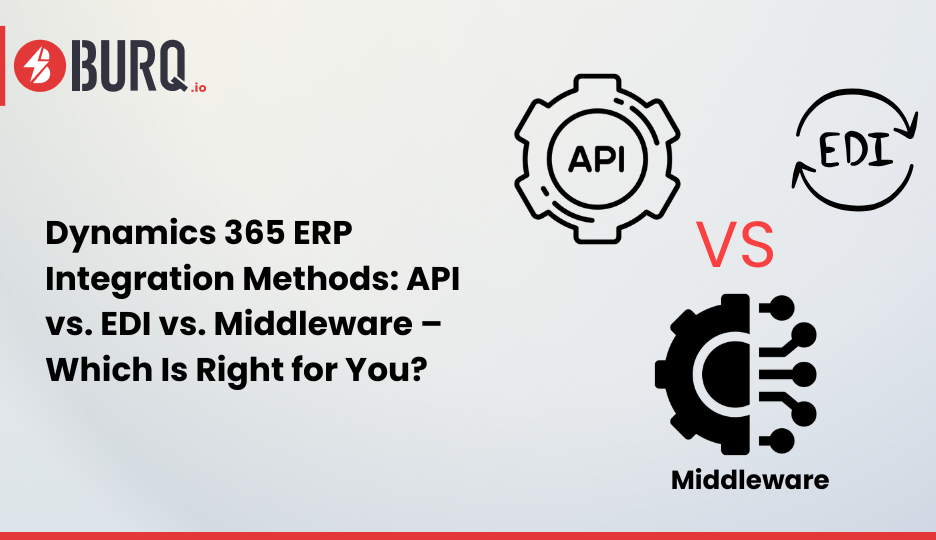
APIs, or Application Programming Interface, provide a set of APIs that applications can use to communicate and share data. These are often used in web services and microservices architectures.
Cloud-Native Middleware Technologies:
This type of middleware is exclusively designed for cloud environments. These solutions support scalability, resilience, and distributed computing, and they do this by using containerization and orchestration tools.
Examples of Integration Hub in Real Life
Integration hub is mandatory for systems that we interact with daily. Some important examples include:
- Apache Kafka:
This is a distributed event streaming platform that is used for building real-time data pipelines and streaming applications.
- RabbitMQ:
It is an open-source message broker that enables communication between applications through message queuing.
- IBM WebSphere:
A complete suite of data exchange platform that is developed to set up, operate, and integrate e-business applications across multiple computing platforms.
- Microsoft Azure Service Bus:
Azure is a completely managed enterprise message broker with message queues and publish-subscribe topics.
- Talend, SnapLogic, MuleSoft:
Integration platforms that provide tools for data integration, transformation, and application connectivity.
Middleware Applications in Different Industries
These applications are found in multiple sectors and enable smooth operations and data flow. Here are a few examples for you:
- E-commerce:
It connects users’ shopping carts with payment gateways, inventory systems, and customer relationship management tools. In the world of e-commerce, it provides a highly interconnected shopping experience.
- Healthcare:
In the healthcare sector, it facilitates the integration of Electronic Health Records (EHR) with lab diagnostic systems, hence enabling real-time data sharing and enhanced patient care.
- Banking:
Connects the basic banking systems with mobile applications, ATMs, and online banking platforms. This way, consistent and secure financial transactions are made.
Why Use Middleware Software?
Although it might be a new concept for you, it has been there all along since the advent of computing. Connector software offers multiple benefits for both developers and enterprises:
- Faster Time-to-Market:
Since it comes with pre-built components and services, the integration layer cuts down on the time required for development time. This way, applications are deployed more quickly.
- Simplified Integrations:
Middleware abstracts and masks the complexities of connecting different systems, leading to easier and quicker integration of new applications and services.
- Improved Scalability and System Communication:
Middleware also enables the scaling of applications by enabling quick and easy communication between components, so that systems can scale to meet increasing demands.
Challenges in Using Middleware
Although middleware offers multiple advantages, it also comes with some challenges: 
- Overhead in Performance:
Using middleware can add latency due to the additional processing layers. Hence, it can have a potential impact on system performance.
- Complex Maintenance:
Managing and updating middleware components can be a bit complex and require expert knowledge.
- Security and Compliance Concerns:
Backend bridge can be a base for security breaches if not secured properly, and to guarantee compliance with regulations, it adds another layer of complexity.
These challenges are particularly pertinent in enterprise application integration, where the integration of multiple systems increases the potential points of failure and security vulnerabilities.
Future of Middleware Technologies
Middleware technologies are evolving quickly, fueled by emerging trends:
- Cloud-Native, Serverless, and AI-Enabled Middleware:
Businesses are moving towards cloud-native architectures, and serverless computing is leading to the development of middleware that can quickly scale and integrate AI features for efficient operations.
- Role in Microservices and Containerized Environments:
As organizations adopt microservices architectures and containerization, middleware is adapting to support these models. It is doing so by offering lightweight, modular, and scalable solutions.
Final Thoughts
Understanding what middleware is and its various applications is as important as having your product knowledge or customer demands. For modern businesses that want to build efficient, scalable, and integrated systems, it serves as the backbone of application integration, helping distinct systems communicate with each other and function as one.
If you are seeking to streamline your IT infrastructure and optimize your system interoperability, then employing integration solutions like Burq can be a powerful move. It provides solid integration capabilities and enables seamless connectivity between multiple applications and services. Joining hands with Burq iPaaS is your first, fastest, and smartest move toward an integrated future!
FAQs on Middleware
Is API a Middleware?
APIs and middleware are distinct concepts, but they are closely related. APIs define the methods and data formats that applications use to communicate; on the other hand, middleware uses APIs to facilitate communication between different systems.
What is the difference between application integration and middleware?
Application integration refers to the process of helping independently designed applications to work together, whereas middleware is the software that enables this integration by providing common services and communication capabilities.
How does middleware support enterprise application integration (EAI)?
Middleware supports EAI by acting as an intermediary layer that connects different enterprise applications, enabling them to share data and processes, and improving efficiency and reducing complexity.