

Why B2B Integration Matters for Your Business
 Everything changes in the blink of an eye in the business world. Today businesses need quick, reliable, error-free, and hassle-free communication with their partners.
However, without a proper B2B integration platform, they face problems such as data silos, time taking manual processes, and delays.
Let us have a look at how B2B integration solutions help businesses operate smoothly:
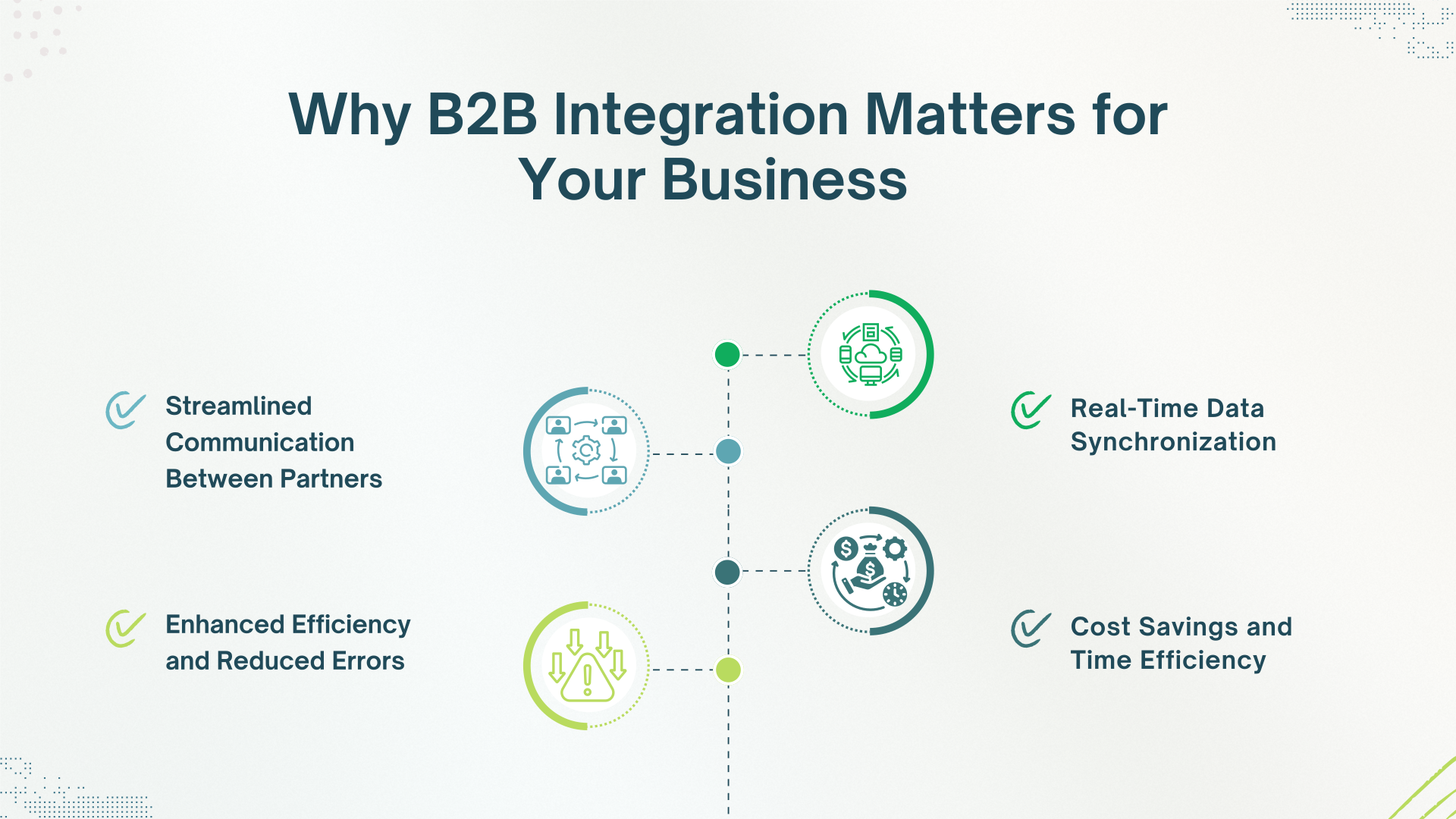
Streamlined Communication Between Partners
Strong and smooth communication is the base of any business relationship. Communication gaps become frequent when businesses use old systems, disconnected databases, or manual procedures.
This results in delays in order processing, incorrect shipments, and unhappy partners. Businesses can get rid of manual data entry by automatically exchanging purchase orders, invoices, and shipping information with the help of B2B data integration.
They can successfully improve supply chain coordination and minimize miscommunication by integrating technology that transmits information in real-time.
Enhanced Efficiency and Reduced Errors
Whenever there is a human hand involved in a process, the possibility of human error is birthed. These errors can be anything from entering incorrect order quantities, missing deadlines, or processing duplicate invoices, but these mistakes can be costly.
A well-integrated system gets rid of these risks by making sure that the data flows smoothly and without requiring human intervention. This enhances accuracy and simultaneously boosts efficiency. This way your employees can also focus on more important tasks rather than fixing errors.
Real-Time Data Synchronization
The business world is intense, and there is no room for waiting for data to be updated. B2B API integration guarantees that data is exchanged in real time across platforms. This way businesses can track stock levels, sales, and transactions in real-time.
This is also very useful in industries such as retail and manufacturing, where factors like stock levels, production schedules, and customer demand changes in a jiffy.
Quick data synchronization helps businesses make informed decisions and prevent stockouts, overproduction, and order delays.
Cost Savings and Time Efficiency
Businesses can cut their labor costs and speed up processes through workflow automation, which in turn boosts profitability. Data reconciliation, document management, and manual order processing all need a lot of time and resources.
Businesses use B2B integration tools to speed up transactions, cut operating expenses, and reduce the time spent on administrative tasks. Eventually, these cost reductions give a competitive advantage and boost financial performance.
Key Benefits of B2B Integration
Businesses investing in B2B integration services today gain a competitive edge in the market tomorrow. Let us go through some major benefits:
Improved Collaboration with Partners
A well-integrated business system leads to better relationships between suppliers, distributors, and customers. When all parties can access accurate, up-to-date information, they can collaborate efficiently.
B2B integration solutions help businesses share important data, and sales forecasts, monitor shipments, and easily manage collaborative marketing efforts. This results in better coordination and stronger partnerships, hence leading to better business outcomes.
Increased Flexibility and Scalability
As businesses grow, they require systems that can scale with them. Traditional integration methods often need costly and time-consuming upgrades.
A B2B integration platform is flexible and lets you connect with new partners, expand into new markets, and integrate additional applications without causing disruptions.
So regardless of whether you are a startup or a big business, these scalable integration solutions help your business to adapt to changing needs.
Better Customer Experience
Efficient business operations benefit customers too, not just the other stakeholders. A good customer experience is a consequence of smooth transactions, accurate delivery tracking, and fast order processing.
According to B2B News Network, Aberdeen Group found that companies with B2B integration solutions achieved a 16% increase in order fulfillment rates and a 25% reduction in order-to-cash cycles.
This way customers are happy when they receive exactly what they purchased at the time they expect. Customer loyalty is always connected with a smooth operational flow.
Cost Savings
Operational inefficiencies lead to resource wastage and increased costs. Businesses that invest in B2B integration services can cut their expenses that arise due to paperwork, manual labor, and IT maintenance.
Automating routine processes like invoicing, order fulfillment, and data reconciliation rids them of unnecessary overhead, and allows them to efficiently allocate resources.
Faster Data Exchange
The old data-sharing methods, like email and fax, are slow and highly error-prone. These days B2B integration solutions facilitate businesses to exchange data in real-time and guarantee that important information is always available instantly.
This high speed means a lot for industries that rely on fast-moving supply chains, such as retail, healthcare, and logistics. Faster data exchange reduces lead times, eliminates stock shortages, and improves business agility.
Types of B2B Integration Solutions
There are many ways businesses can integrate their systems. Let us take a look at the most common B2B integration solutions:
API-Based Integrations
Application Programming Interfaces act as bridges between different systems, enabling them to communicate and exchange data in real time.
This is a very flexible method, which is why it is a popular choice for companies that wish to connect modern applications such as eCommerce platforms, ERPs, and CRMs. With B2B API integration, businesses can automate their transactions, sync data, and boost efficiency without manual intervention.
EDI (Electronic Data Interchange)
B2B EDI integration has been the standard for many years, especially in industries like manufacturing and retail.
Businesses can minimize paperwork and human intervention by using EDI to electronically exchange structured documents, such as purchase orders, invoices, and shipping alerts.
For smooth order fulfillment and supply chain management, a lot of big businesses require their partners to use EDI.
Cloud-Based Integration Platforms
Cloud-based B2B integration platforms are a modern and highly scalable method for integration. These platforms come with pre-built connectors for famous applications, and let businesses set up integrations quickly without extensive coding.
By cloud-based integration, they can connect their systems globally, cut down infrastructure costs, and enhance data security.
How to Implement B2B Integration in Your Business
Implementing B2B integration solutions needs careful planning. Here is how businesses can get started:
- Identify Your Integration Needs: Start by determining which systems, such as ERP, CRM, and eCommerce, need to be connected.
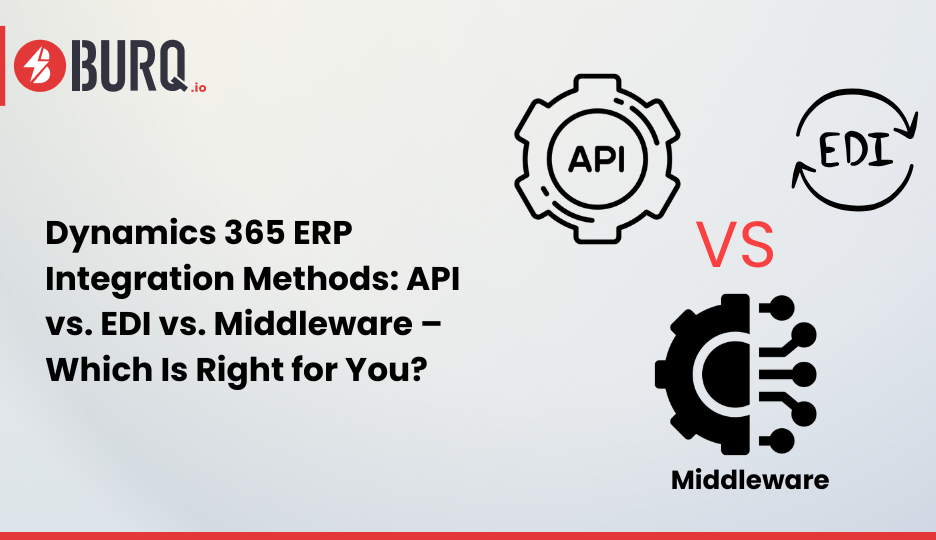
- Choose the Right Integration Method: Decide between APIs, EDI, or middleware solutions, according to your business needs.
- Select a Reliable B2B Integration Platform: This is the most important step of all. Powerful integration Platforms like Burq iPaaS make this simple for you and support easy data exchange.
- Ensure Data Security and Compliance: Protect sensitive business information with secure encryption and access controls.
- Test and Monitor Performance: Frequently monitor integrations to detect and fix issues before they escalate and affect operations.
Get Started with Burq’s B2B Integration Platform
Businesses need B2B integration to improve their supply chain management and automate workflows to remain competitive in the modern digital economy.
A carefully chalked-out business-to-business integration strategy boosts efficiency, reduces costs, and strengthens partnerships. Whether you need B2B API integration, EDI connections, or cloud-based integrations, the right tools can make or break it.
If you want an easy-to-use, scalable, and secure integration solution, then check out Burq iPaaS. Many companies have already revamped their operations, now it is your turn!
FAQs
- Why is B2B integration important?
B2B integration is important because it helps data exchange between businesses by automating it, hence, reducing manual errors, improving efficiency, and facilitating real-time communication. Companies can simplify operations, collaborate smoothly with partners, and provide better customer experiences.
- What is A2A and B2B integration?
A2A (Application-to-Application) integration connects different applications within a single organization, such as linking an ERP system with a CRM. On the other hand, B2B (Business-to-Business) integration connects systems between different businesses, helping in smooth data exchange with stakeholders.
- What is B2B EDI integration?
B2B EDI integration lets businesses exchange structured documents electronically, such as invoices and purchase orders, without manual data entry. It is widely used in industries such as retail, healthcare, and manufacturing for uninterrupted supply chains.
- What are the two main types of B2B integration?
EDI (Electronic Data Interchange) and API-based integration are the two main kinds of B2B integration. While EDI is a defined process for the exchange of structured business documents, an API-based integration provides flexibility and real-time data exchange.