

What is Integration Middleware?

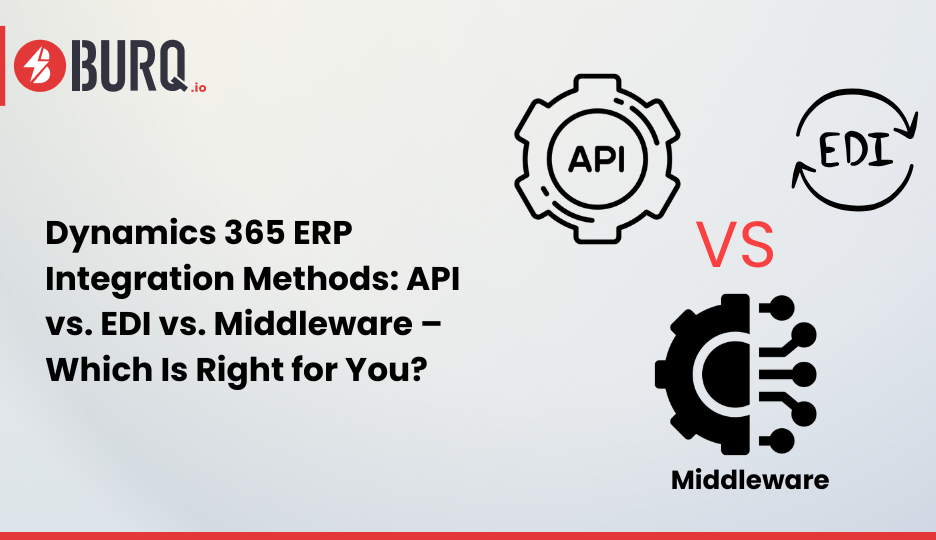
If we explain it simply, “integration middleware” is software that acts as a bridge between different applications. These applications can be cloud-based or on-premise.
It is a third‑party solution that facilitates communication across your IT ecosystem. It makes integrations simple by avoiding direct point‑to‑point connections.
The middleware software gives you a uniform method to connect systems, rather than scripts or API code that you have to write yourself. It handles all the complex technical stuff such as authentication, data formatting, protocol changes, etc.
This way, your teams can focus on building value, and not wasting time getting caught in the intricacies of managing each app and data. It is very helpful in distributed environments where multiple systems, which comprise both legacy and modern systems, need to interact seamlessly, acting as middleware glue.
How Does Integration Middleware Work?
Integration middleware supports multiple communication methods, such as the following:
- APIs & webhooks: for real‑time data exchange
- Message queues: by message-oriented middleware using publish/subscribe or queuing to decouple senders and receivers  
- File transfer: batching CSV or XML files
- Queues & buffers: ensuring asynchronous data flow
Middleware also handles data transformation (e.g., JSON ↔ CSV), routing (sending data to the right place), and protocol conversion (SOAP ↔ REST).
You can select between synchronous (wait for response) or asynchronous patterns depending on your requirements. By centralizing this logic, middleware makes maintenance much easier than script-based integrations that can be broken.
What Are the Main Types of Integration Middleware?
There are several main types of middleware available in the market:
- Enterprise Service Bus (ESB): This is a centralized “bus” architecture that handles message routing, transformations, and protocol bridging across various systems.
- iPaaS / EiPaaS: These are cloud-based services that let you build integrations with the help of visual flows and by providing pre-built connectors.
- API Integration Middleware: This focuses specifically on API-based communication between applications, and it is ideal for SaaS-to-SaaS connections.
- Embedded or MaaS (Middleware as a Service): Middleware embedded into platforms like BURQ iPaaS provides low-code/no-code integration capabilities inside the software itself.
You can choose ESB for complex on-premise ecosystems, but iPaaS often takes the lead when it comes to hybrid or cloud environments thanks to its ease of use and scalability.
What Are the Benefits of Using Integration Middleware?
There are various visible benefits of incorporating middleware into your environment:
- Break data silos: You can avoid data duplication by syncing key information across systems in real time.
- Boost efficiency: Automate the repetitive data entry tasks so teams can focus on work that matters.
- Scalability: Integrate new apps without rewriting every script, because middleware handles connectors.
- Developer productivity: You can get rid of the brittle point-to-point code, as middleware lets developers focus on logic instead.
- Cost savings: Less custom code means lower long-term maintenance.
- Governance & error handling: Centralize logging, monitoring, and alerting, something basic scripts struggle to do.
Solid Middleware integration tools like BURQ iPaaS offer you off-the-shelf connectors and dashboards that simplify building and managing integrations easily, and also let you scale.
What Are the Challenges or Drawbacks?
Middleware is not magic; it does come with its challenges:
- Vendor lock-in & cost surprises: License fees and per-connector pricing can add up to your cost and might be difficult for small-scale enterprises.
- Complexity: ESBs are powerful but need specialists to manage them.
- Maintenance overhead: Middleware becomes central infrastructure, hence requiring continuous monitoring and maintenance.
- Latency concerns: Adding a middleware layer may cause delays if it is not designed well.
- Security/compliance: With more data flow comes increased responsibility, such as encryption, roles, and compliance checks.
- Observability needs: Some platforms do not have deep monitoring, making debugging difficult.
However, the high level of control and visibility that the middleware provides offsets these concerns, especially if done with proper planning.
How to Choose the Right Integration Middleware Solution?
You must take into consideration these important factors when deciding upon a middleware:
- Scale needs: Will you connect dozens of apps or just a few? And would the integration middleware let you scale easily as you add new apps?
- Architecture fit: Consider the architecture. Is it Cloud vs on-premise? Hybrid? Or Low-latency?
- Budget & licensing: Cloud services usually price per volume; ESBs cost upfront.
- Low-code vs full-code: Do non-technical staff need to build integrations? A low-code integration software is always the best option for non-technical staff.
- Security & governance: For security of data, always look for role-based access, audit logs, and encryption.
- Connector availability: How many connectors does it provide? The more the better!
However, it is important to observe all these factors. Many platforms are still building capabilities to fill that gap so you can trace failures and monitor performance.
What Are Top Middleware Integration Tools & Platforms?
Now you must be wondering about the best available middleware integration tools out there. SO here are a few top middleware choices:
- BURQ iPaaS: This is a powerful iPaaS with low-code/no-code UI, which is easy to use and has a strong connector library. On top of this, it scales easily.
- Merge: Unified API focused on customer-facing integrations.
- Workato: Cloud iPaaS with embedded capabilities, citizen integrators, connectors, security, on-premise support.
- Boomi, Celigo, SnapLogic, MuleSoft, Zapier: widely used across enterprise stacks.
Users have praised these tools for letting modern teams build internal and custom integrations quickly without heavy deployments.
What Are Middleware Integration Best Practices?
To get the most from your middleware integrations, you must follow these practices:
- Use real‑time webhooks & APIs, not batch or embedded app logic.
- Build powerful error handling: define retries, failure paths, logs, etc.
- Separate connectors from business logic: modularize recipes or workflows.
- Use CI/CD for integration pipelines: test changes in staging before going live.
- Governance matters: Enforce roles, version control, data models, audits.
- Monitor & observe: Platforms must report latency, throughput, errors.
These steps can help your integrations stay resilient and manageable as you grow and scale.
What Is the Future of Integration Middleware?
So what is next? What does the future hold for integration middleware? Here is a sneak peek:
- AI-powered automation: AI is leading all operations now. Tools like Workato are adding intelligent recipes based on usage.
- Unified observability: Merge emphasizes end-to-end trace tools to make debugging easier.
- Embedded middleware: Expect integration platforms like BURQ iPaaS and Workato to be embedded and let software vendors embed integration inside their products.
- Middleware as a Service (MaaS): Fully managed middleware services to take integration hosting off your plate.
- Event-driven and low-code: Supporting citizen integrators with drag-and-drop and near real-time triggers.
Middleware is evolving at a quick pace. Stay tuned for these trends to deliver even more value to businesses.
Conclusion
Integration middleware is the hero working hard at the backend in a modern enterprise stack. Like we stated earlier, it is the glue that binds systems, boosts efficiency, and powers agility.
It helps teams move faster, cut down errors, and scale integrations without getting into costly custom scripts. Thus, if you are looking for a solid middleware, you must consider your scale, team needs, governance, and future roadmap.
You must explore options such as BURQ iPaaS to take the first step!. Building scalable, observable, and secure integrations will pay off quickly, and you will be able to see tangible and long-term results!
Frequently Asked Questions
1. What does middleware do?
Middleware acts as intermediary software that connects your separate systems and apps. It handles data transformation, routing, protocol bridging, and guarantees reliable communication across your tech stack.
2. What’s the difference between middleware and integration middleware?
Middleware includes web servers or object request brokers. Integration middleware is focused on data exchange and workflow orchestration across your applications, especially via APIs and message systems.
3. What types of middleware exist?
There are message-oriented (queues), ESBs, iPaaS, embedded middleware, device middleware, and even domain-specific layers for e‑commerce, robotics, or gaming.
4. What are middleware examples in e‑commerce, IoT?
There are many examples; you can consider inventory sync engines, order routing hubs, IoT message brokers, or embedded transactional flows inside e‑commerce platforms.
5. What is embedded integration middleware?
Middleware embedded directly in your applications UI, sometimes via iFrame or SDK, so that your users manage integrations without leaving your product. Workato Embedded and BURQ iPaaS offer this.
6. What is middleware as a service?
MaaS delivers managed middleware in the cloud. IT combines iPaaS with full hosting and monitoring, letting your team focus on workflows while vendors manage the infrastructure.