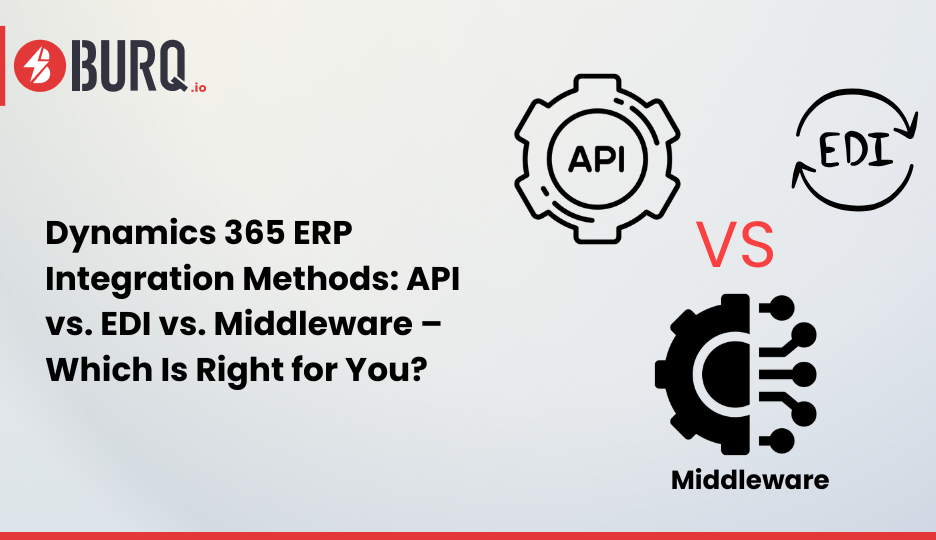


With data being the lifeline today, have you ever wondered how businesses exchange data so smoothly across a myriad of platforms? The debate between EDI vs API has now been going on for a long time, and there is no doubt that each comes with unique benefits. However, understanding their differences and how they can complement each other will help you optimize your business operations.
What’s the Difference Between EDI vs API?
Electronic Data Interchange (EDI) and Application Programming Interfaces (API) are two primary methods businesses use for exchanging data. Although for many years EDI has been a go-to choice in industries like retail and manufacturing, APIs have gained a lot of popularity with the rise of web-based applications.
According to industry reports, EDI continues to be widely adopted, especially in traditional sectors. The global Electronic Data Interchange (EDI) software market size was valued at USD 2.08 billion in 2024 alone. But on the other hand, API usage is growing rapidly in tech-driven industries, with the global API management market size valued at USD 5.42 billion in 2024.

Let us compare their core differences:
- Data Mode:
EDI uses the batch processing model, transmitting large volumes of data at scheduled intervals. On the other hand, APIs enable real-time data exchange, facilitating instant communication between systems.
- Formats and Protocols:
EDI uses standardized formats like ANSI X12 or EDIFACT, which warrant consistency across transactions. APIs commonly use two protocols: REST or SOAP APIs. They offer flexibility in data formatting.
- Performance and Scalability:
Although EDI is a solid option for handling large-scale transactions, scaling requires additional setup. On the other hand, APIs are inherently scalable and can handle increasing data volumes with ease.
- Implementation Complexity:
Implementing EDI can be complex as it requires expertise and compliance with industry standards. APIs, on the other hand, are generally easier to adopt, especially when exploring API integration models designed for scalable businesses.
It is important to have a thorough understanding of the difference between EDI and API when considering EDI integration or evaluating api vs EDI for your business needs.
EDI Integration in the Supply Chain
EDI has a key role when it comes to supply chain management. This is because it facilitates the standardized exchange of business documents, such as the following:
- Common EDI Documents:
Transactions like Purchase Orders (850), Invoices (810), and Advance Ship Notices (856) are exchanged using the EDI. It optimizes and streamlines the procurement and logistics processes.
- Trading Partner Collaboration:
EDI facilitates uninterrupted communication between businesses and their trading partners. Guaranteeing the timely and accurate exchange of all data.
- Communication Setup:
Implementing EDI requires devising communication protocols, mapping data fields, and complying with industry standards.
If we consider EDI vs api in the supply chain, EDI is always a reliable choice for structured and high-volume transactions. Hence, EDI integration is a valuable asset for many businesses in the supply chain.
API Integration in the Supply Chain
APIs have uplifted and transformed supply chain operations through real-time connectivity. To understand this better, explore how APIs work to connect disparate systems efficiently. Here are a few notable factors:
- Real-time Tracking:
APIs enable businesses to track their shipments and inventory levels in real-time, thus giving them high visibility and enabling responsiveness.
- SaaS Platforms and Marketplaces:
Integrating APIs with SaaS platforms helps in seamless data flow across multiple applications. This improves the operational efficiency.
- Front-end Use Cases:
APIs are mandatory for connecting e-commerce platforms and CRMs. They guarantee up-to-date and the same information to be shared across customer-facing systems.
When considering api in the supply chain, its ability to integrate systems in real-time brings many advantages, especially when exploring api and EDI integration strategies.
Technical Comparison
Here is a quick comparison to help you see the differences at a glance:
| Aspect | EDI | API |
| Data Mode | Batch transfers (e.g., nightly file exchange) | Real-time requests and responses on demand |
| Formats | Standardized (X12, EDIFACT) | Flexible (JSON, XML, GraphQL) |
| Use Case | High-volume orders, invoices, ASN, etc. | Interactive lookups, IoT updates, partner APIs |
| Speed | Scheduled intervals (hours/days) | Instant, real-time within seconds |
| Security | Mature protocols (AS2, OFTP, VPN) | Token-based auth (OAuth, API keys) |
| Implementation | Requires EDI gateway/tools and mappings | Requires development of API calls and endpoints |
Business Benefits: Why Use EDI and API
Your business can reap multiple benefits by integrating both EDI and API Here are a few:

- Manual Error Reduction:
By automating data exchange, you can reduce the risk of human errors, hence leading to data accuracy.
- Cost and Time Savings:
With process optimization, you can reduce operational costs and enhance efficiency.
- Enhanced Visibility and Scalability:
Real-time data access and scalable solutions improve decision-making and enhance customer experience.
The advantages of api, coupled with traditional EDI systems, build a solid framework for edi api integration, and refine your business operations.
When to Use EDI vs API
Although it is tough, however, choosing between EDI and API depends on various factors such as the following:
- Use Case Scenarios:
EDI is perfect for standardized, high-volume transactions; on the other hand, APIs are more suitable for dynamic, real-time interactions.
- Business Size and Data Needs:
Larger enterprises with highly established systems can prefer EDI; however, businesses that are scaling up can benefit more from the flexibility provided by APIs.
Understanding the difference between EDI and API can help in making informed decisions that are suitable for your business needs and let you assess API vs EDI based on specific needs.
Integrating EDI and API: The Best of Both Worlds
EDI and API combined can lead to a highly agile and responsive business model. Here is how:
- Middleware/iPaaS Use: Integration platforms can bridge the gap between EDI and API, especially when comparing iPaaS vs API management for the right fit in hybrid architectures.
- Hybrid Workflows: Implementing API-wrapped EDI or transformation engines enables businesses to enjoy the benefits of both systems.
- Real-world Examples: Many companies have successfully adopted and implemented dual setups and boosted their operational efficiency and adaptability.
Exploring api edi integration strategies can give you a competitive advantage, and make sure that edi api systems work in collaboration to meet the dynamic business demands.
Conclusion
To wrap it up, although EDI and API serve different purposes, integrating them can give you an all-in-one solution for data exchange. Assessing edi vs api in the context of your business model and partner network is a must. By milking upon the strengths of EDI and API, businesses can boost their efficiency, achieve scalability, and satisfy their customers.
However, it is important to have a powerful integration platform to help you achieve this. You must consider exploring integration platforms like BURQ iPaaS to help in seamless EDI API integration. Hence, this way you can future-proof your business in this competitive landscape.