

5 Best Shopify ERP Integration Solutions

Choosing the best ERP integration for Shopify is a make-or-break decision for your business. To increase productivity and expand in the eCommerce market today,.
Here are five of the best Shopify ERP integration solutions to consider in 2024:
1. Microsoft Dynamics 365
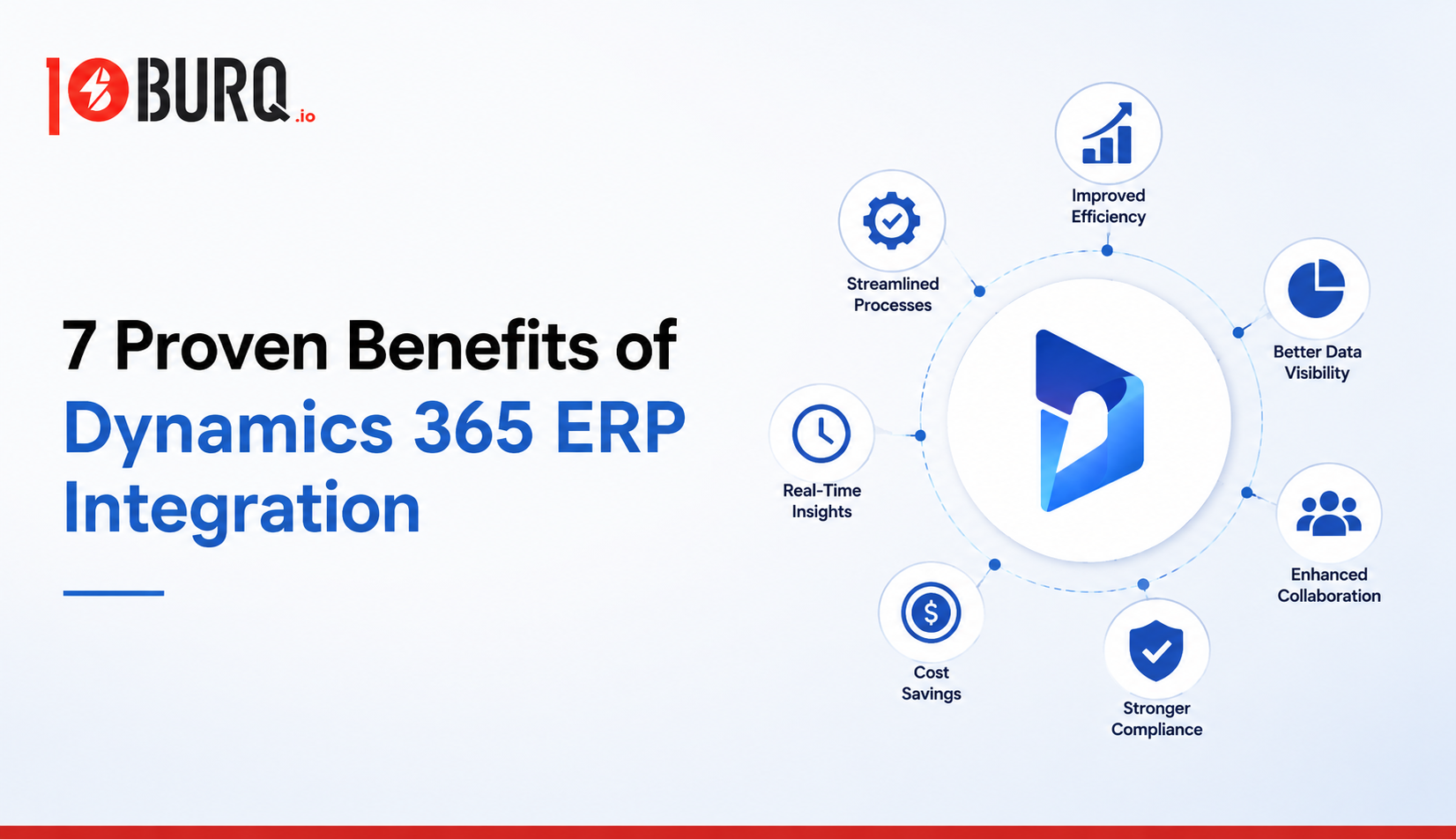
Microsoft Dynamics 365 is a powerful cloud-based ERP system that easily integrates with Shopify. This solution helps automate standard procedures like order processing, inventory management, and customer relationship management.
Its modular design allows you to customize it according to your unique business requirements, making it an excellent option for businesses of all sizes.
Key Features
- Comprehensive business management: This includes finance, operations, sales, customer service, etc.
- Customizable modules: This capability lets you add finance, retail, or HR features.
- Real-time data syncing: This enables you to make sure that your Shopify store and backend systems are aligned.
Pricing
Microsoft Dynamics 365 is subscription-based. Its pricing varies depending on your chosen modules and features, with plans starting from around $40 per user per month. Larger businesses with more complex needs may incur higher costs.
2. Oracle NetSuite
Oracle NetSuite is among the most powerful, popular, and widely used ERP systems. It provides a complete suite of features designed to integrate easily with Shopify. It is perfect for expanding businesses searching for a cloud-based solution to manage everything from finances to eCommerce analytics.
Key Features
- End-to-end functionality: Oracle NetSuite covers everything from accounting to CRM.
- Real-time insights: It lets you access real-time data that helps you make informed decisions.
- Automation: Simplifies and organizes processes such as inventory management and order fulfillment.
Pricing
Oracle NetSuite provides pricing upon request and usually requires a custom quote. For smaller businesses, its prices typically start around $99 per user per month but can go up depending on the modules and customization required.
3. SAP Business One
SAP Business One is a famous ERP for small—to medium-sized businesses that need a solid solution with strong integration features. SAP connects easily with Shopify and provides good functionality for managing every vital function, including finances, inventory, customer relationships, and sales.
Key Features
- Customizable modules: SAP Business One Offers great flexibility in finance, CRM, and supply chain management features.
- Mobile app integration: The mobile app allows you to access your data and manage your operations on the go.
- Advanced analytics: You can get detailed financial, inventory, and sales reports.
Pricing
SAP Business One starts at $94 per user per month and is priced according to the company’s needs. Due to the volume and level of customization needed, costs can be higher for larger implementations.
4. Odoo Connector
Odoo is an open-source ERP system that can be easily integrated with Shopify. Odoo comes with a complete set of business management tools. It also includes solid modules for eCommerce, sales, CRM, inventory management, and accounting.
Key Features
- Open-source flexibility: You can customize Odoo according to your exact business requirements.
- All-in-one solution: Odoo integrates eCommerce, CRM, sales, and more in one cohesive platform.
- User-friendly interface: it is relatively easy to navigate, even for users lacking technical expertise.
Pricing
The pricing is based on the number of apps you choose and the number of users. The core plan is free for a single user, with additional modules costing around $12 per user per month. Custom features and extra support may increase the price.
5. Sage
Sage is another good choice for Shopify ERP integration. It offers a cloud-based solution that is well-suited for mid-sized businesses. Sage is famous for its financial management features but also outshines inventory management and order processing.
Key Features
- Robust financial management: Sage efficiently handles invoicing, tax calculations, and reporting.
- Inventory control: It tracks and manages your products in real-time.
- User-friendly: The simple interface of Sage makes it easy to implement and use.
Pricing
The pricing of Sage starts at $10 per user per month for basic plans and increases to higher-tiers with more advanced features. Custom pricing is an option for enterprises requiring extensive support and customization.
Why Is Shopify ERP Integration Necessary?
If you have been running your Shopify store without an integrated ERP system, you may face several problems, including inaccurate data, lost automation opportunities, and inefficient inventory management.
However, a successful Shopify ERP integration can fix these issues and improve operations.
Here are some of the reasons why ERP integration is essential for your business:
- Real-time synchronization: Data flows flawlessly between Shopify and your backend systems.
- Improved efficiency: Automating inventory control and order processing processes frees your staff to work on more complicated tasks.
- Data-driven insights: Access to real-time data helps you make better decisions about inventory, pricing, and promotions.
In short, an ERP integration lets you focus on long-term objectives, such as growing your business, rather than getting bogged down by manual processes or worrying about data-related issues.
What should you look for in Shopify ERP Integrations?
Multiple factors must be considered when selecting the right Shopify ERP integration solution for your business. Keep these features in mind as you analyze your options:
- Compatibility: Make sure the ERP program is compatible with the Shopify store you currently have and any additional tools you may have.
- Data Security: Safeguard your sensitive data with encryption and secure authentication protocols.
- User-Friendly Interface: Select an ERP system with an intuitive interface that does not require extensive technical expertise to be used effectively.
- Scalability: Your ERP should be able to grow along your business.
- Customer Support: Make sure your software provider facilitates you with responsive and reliable customer service.
- Cost: You should be able to balance your budget with the features you need. Look for an ERP system that offers good value for your investment.
Considering the factors above, you can make an intelligent decision and select an ERP solution that will help your business fulfill its needs for many years to come.
Conclusion
Finding the best Shopify ERP integration solution for your business will immensely boost customer satisfaction and simplify inventory management, among numerous other operations aspects. Oracle NetSuite, SAP Business One, Odoo, Sage, and Microsoft Dynamics 365 are all appropriate choices, each with advantages.
As you search for an ERP integration, you must consider Burq iPaaS. Its matchless integration capabilities and user-friendly platform provide businesses with an excellent solution for linking their Shopify stores with ERP systems.
Hence, if you are ready to maximize the capabilities of your Shopify store with a smooth ERP integration, visit Burq to begin your journey today!