

According to Gartner, the worldwide IT spending is expected to reach a massive $5.61 trillion in 2025, which is an increase of 9.8% from 2024! With each passing day, data is being created at an exploding rate, and businesses are investing billions in trying to stay ahead in this digital-first business environment. Agility and precision matter like never before, and relying on manual methods for purchasing, billing, and shipping slows you down, increases costs, and makes you more prone to human error.
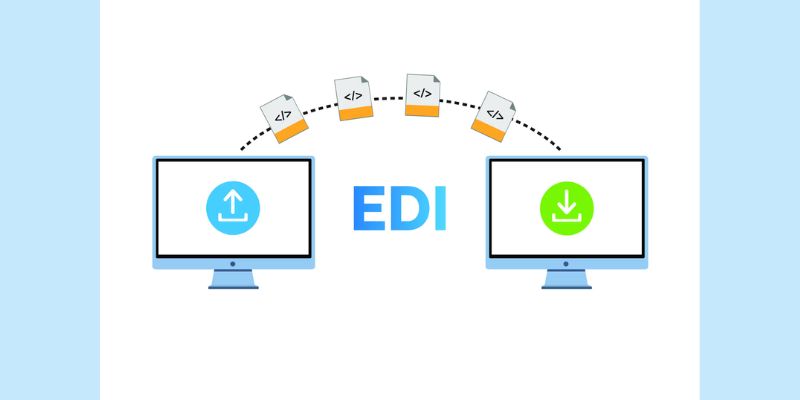
To manage data efficiently and make the most of it, companies are turning to Electronic Data Interchange (EDI), which is a system that modernizes document exchange by connecting you directly with your partners through standardized and automated data exchange formats.
EDI facilitates computer-to-computer transfer of important documents that can follow a standard structure and format. These documents can be your purchase orders, invoices, shipping notices, and inventory updates.
This way, you can eliminate manual steps like printing, faxing, and posting. Let us dig deeper and have a look at the top 10 benefits of EDI integration. We will explain why businesses that use it are gaining benefits such as speed, security, cost efficiency, scalability, and stronger collaboration with their partners.
Why Businesses Are Turning to EDI Integration
You probably cringe when you think about endless emails and email attachments, massive spreadsheets, and siloed systems coordinating order flows. Manual processes slow nearly everything down, create a variety of errors, and expose you to compliance risks. This is where EDI benefits become visible.
By using a powerful EDI integration platform, businesses can remove inefficiencies and reduce administrative overhead. You get consolidated workflows, fewer mistakes, and real digital scalability. The EDI advantages lead to highly accurate transactions, predictable performance, and measurable EDI cost savings.
10 Key Benefits of EDI Integration
Let us break down each benefit for you in detail, so you can truly see why the benefits of EDI matter the most today.
1. Faster Transaction Processing
With the help of EDI integration platform technology, you can connect your important documents, such as purchase orders, invoices, shipping documents, and acknowledgments, directly between systems in real-time. You no longer have to wait for delays in fax, email, or postal services.
That means faster order processing, quicker payments, and shorter turnaround times. In fast‑moving industries, faster transaction processing gives you a huge edge over your competitors.
2. Reduced Manual Errors
One of the biggest advantages of EDI enterprise data integration is that you eliminate human data entry. Documents transfer automatically between trading partners and your ERP or CRM. This, in turn, removes typo errors, duplicates, misplaced records, and also the headache that comes with reconciliation. You get cleaner, more reliable data the first time; you do not have to do it again and again.
3. Significant Cost Savings
When you automate B2B document exchange, you immensely reduce your administrative labor, printing, storage, postage, and chargebacks. According to a report, the UK grocery sector’s cost savings per year using EDI were £650m. If you invest once in an EDI integration platform, you can see long‑term ROI through operational efficiency and fewer manual tasks. Now this is one of the most evident benefits of electronic data interchange.
4. Real-Time Data Visibility
With the help of EDI integration, you get dashboards, alerts, and audit trails for every transaction that is carried out. You can monitor the status of each document in real time, track exceptions, and validate document compliance. This centralized visibility gives you a command‑center view versus guessing whether a PO or invoice arrived and was accepted or not. It becomes much easier to troubleshoot and stay compliant.
5. Improved Supply Chain Efficiency
When trading partners, suppliers, and logistics teams exchange documents using the EDI, communication becomes clear and streamlined. Your inventory updates, purchase orders, and shipping notices flow automatically. As a result, this reduces the fulfillment delays, minimizes stock‑outs or over‑stocks, and optimizes all the supply chain operations. Smooth coordination means smart inventory.
6. Strengthened Business Relationships
If the data exchange is always consistent and standardized, it builds trust with your partners. When documents always flow on schedule and reliably, you reduce disputes over late or incorrect orders. This high reliability makes it easier to onboard new partners and also strengthen relationships with all of them. EDI benefits also include better collaboration, stronger SLAs, and smoother long‑term partnerships.
7. Enhanced Data Security and Compliance
EDI transfers use secure protocols such as AS2, HTTPS, and SFTP, and include solid security measures such as encryption, authentication, and access controls. This enhances your compliance with regulations like HIPAA, PCI‑DSS, SOX, and GDPR. The advantages of EDI also include audit trails that validate who sent what and when. For industries belonging to sensitive domains, this is something that is non‑negotiable.
8. Scalability for Growth
As your business grows, your volume of transactions also grows. This is also true when you add new partners, edi enterprise data integration scales with you. You can support multiple document standards like ANSI X12, EDIFACT, VDA, and TRADACOMS without adding more staff. The platform accommodates growth, hence you do not need a growing team to manage it. That scalability is critical for expanding businesses.
9. Standardization Across Platforms
An EDI integration platform enables you to connect ERP systems and other systems, such as CRM or WMS, by using standard document formats. That standardization avoids custom scripts and mismatches in format. Whether you choose BURQ iPaaS or another integration tool, integrating EDI into your enterprise data integration strategy gives you uniform and consistent data flows across systems.
10. Competitive Advantage
One of the most compelling advantages includes faster partner onboarding, more accurate SLA compliance, and fewer disruptions. These differentiate you from competitors. Companies adopting EDI indeed reported shorter onboarding timelines with prebuilt templates. You move into new markets faster and efficiently handle trading partner demands. This agility makes EDI advantages a strategic enabler rather than just a technical tool.
Conclusion
Now that you are aware of these top 10 benefits, it is clear: the benefits of EDI are highly business‑critical; you must reap them all. When you adopt EDI, you provide faster service, reduce errors, cut your operational costs, and build trust and confidence with your partners.
It is no longer optional; rather, it is a must now for scalable digital operations. If you are exploring integration choices, an EDI integration platform such as Burq iPaaS gives you a solid way to automate workflows and scale efficiently. The advantages of electronic data interchange must become your business advantage!
FAQs
1. What types of documents can I exchange with EDI?
There are multiple types of documents, you can send and receive purchase orders (850), invoices (810), advance shipping notices (856), inventory updates (846), functional acknowledgments (997), and more. EDI supports many standardized document formats across partners.
2. How quickly can I onboard a new trading partner?
With the help of prebuilt templates and connectors from modern EDI integration platforms, onboarding can be done in a matter of days instead of weeks. That speeds up time to trade and revenue generation.
3. How does an EDI integration platform save costs?
It cuts the labor on manual entry, eliminates paper and postage expenses, and reduces chargebacks from mistakes.
4. Is EDI secure enough for regulated industries?
Yes. EDI uses secure protocols (AS2, HTTPS, SFTP), encryption, role-based access control, and full audit trails. That supports compliance frameworks including HIPAA, PCI-DSS, SOX, and GDPR.
5. Can EDI scale with my business as I add partners?
Absolutely. Scalable EDI enterprise data integration platforms support multiple document standards and automated partner onboarding. They adapt as your network grows without requiring you to hire more IT staff.